


























"Technology News" Smartwatch Step Counter: How Does My Smartwatch Count My Steps?
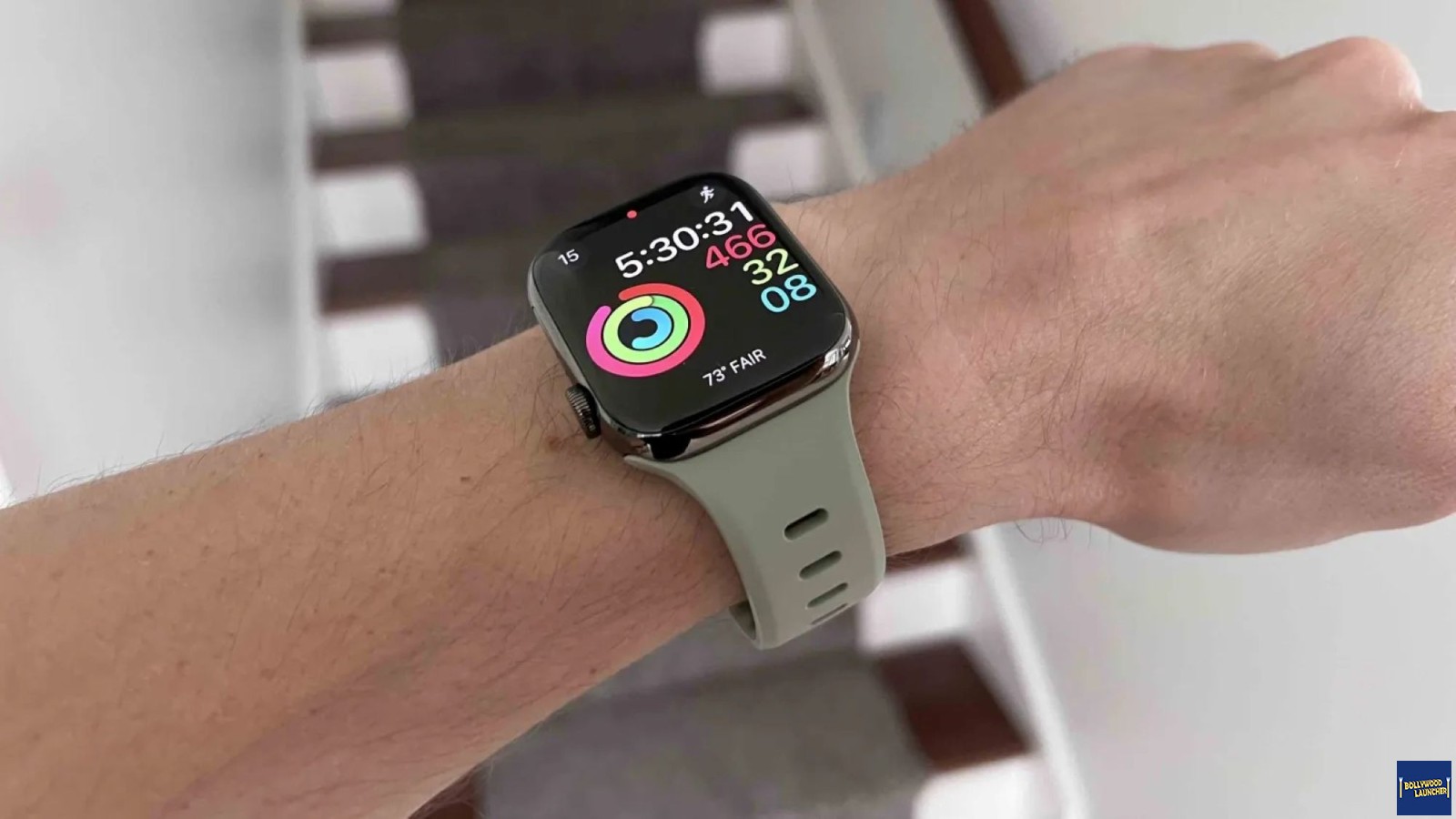
Smartwatch Step Counter: How Does My Smartwatch Count My Steps?
Getting to grips with that 5,000-step count. A modern smartwatch doesn’t just tell the time - it measures your steps, heart rate, calories and so much more throughout the day.
But did you know the 5,000-step count could be influenced by sensors on your tiny wrist device.
So, do you want to understand how the Smartwatch counts steps? Smartwatches are equipped with motion sensors – usually accelerometers, but some have gyroscopes as well. They monitor how the device moves. When you take a step, your body shifts.
The motion sensors detect changes in speed and direction and, using an algorithm, differentiate it as a walk or a casual arm move.
The role of the accelerometer The most common sensor found in a smartwatch is the accelerometer, which can measure both the magnitude and direction of motion in three axes, allowing it to detect your steps accurately. Any movements from your wrist such as when you walk cause its readings to spike. Whenever there’s a clear spike it corresponds to what’s known as a "hit," “bump” or simply a detected “event”.
For a hit to be recognized as a step it needs repeated spikes in a particular rhythm. If the rate of spikes continues consistently and for an extended period, the system registers those movements as a step. The gyroscope also helps Sometimes smartwatch also integrate gyroscopes that determine the angular movement of the wrist and its orientation.
The more sensors (like a 3-axis motion sensor that tracks the 3 axes of motion along with a combination of 3-axis accelerometers and 3-axis gyroscopes found in other models), combined together on a smartwatch the higher will be its accuracy in monitoring your daily activities.
Does Smartwatch Count step count accurately?
Smartwatches use a complex set of movements that, along with an algorithm based on different features of these movements, translate into counting ‘step’. However, just because you move your arms a lot while talking or get out of your chair to pick up another object shouldn’t mean the count be an automatic step. While many are very good, there are always some cases in which you will have either slightly less than the usual number of steps recorded or vice versa.
Thus ‘5,000 steps’ on a smart device isn’t necessarily an actual 5,000 ‘pure steps’ as you can either overstate or understated a bit of counts.
How do you make up for 5,000 steps?
In order for a smartwatch to measure you have taken 5,000 steps, you may have taken a certain number of steps to reach to and from work, while at work and during your evening walk. Your evening walk might have added 3,000 steps to the 2,000 you took getting around your work and during your commute to and from work.
Your smart watch will then total up your steps and in this situation may round up or down to 5,000 steps. Other sensors A wide variety of sensors, not merely motion sensors. Your smart watch can be fitted with a PPG sensor for measuring your heart rate, perhaps it has an ECG, or even an on board GPS to help track distance.
Smart watches may have different levels of health and motion sensors such as the 3axis motion sensor with both a combined with high sensitivity tri-axis accelerometer and/or high speed tri axis gyro to get a high resolution motion signal with low power in your smart watch to ensure you have a more accurate step count.
Getting your step count correct Some helpful tips to ensuring your steps count more accurately include: - Make sure you are wearing the smart watch snugly around your wrist. -Wear it while it is on your wrist normally as it would be while working out. -If it has the option to set details such as height, weight, and age, then put accurate info in. - Remember that if your smartwatch’s step counter is a few hundred (or even a thousand or so) steps off the real number it’s fine, just like if you go from your doctor’s appointment the exact amount as the smart watch records it will never count accurately enough to reflect that medical result anyway. To count your steps, smartwatches use a combination of motion sensors and advanced algorithms that detect the characteristic movement of your wrist when you walk. If the sensor registers a pattern that matches walking, and especially if it does so repeatedly and consistently, the smartwatch interprets it as a step.
#smartwatch #newsupdates
- Category:
- Lifestyle
- Aug 21, 2026
- 38 views
- No comments